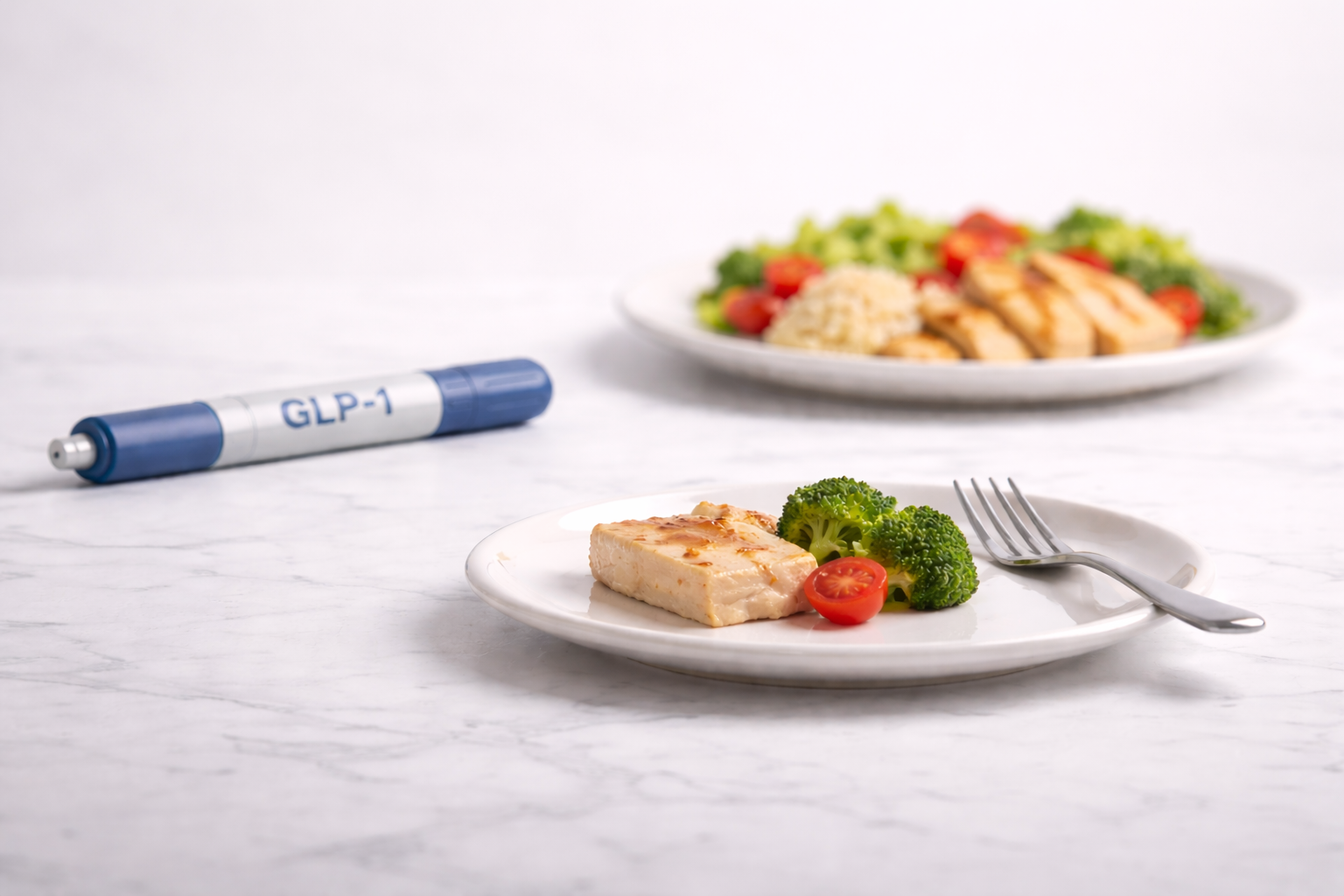
If your appetite has started to feel different since reducing or stopping your GLP-1 medication, you are not imagining it.
You may notice:
- Hunger returning more frequently
- Increased interest in food
- Portion sizes slowly increasing
- The return of “food noise”
Many people immediately worry:
“Is this the beginning of weight regain?”
Before panic sets in, it’s important to understand something fundamental:
Appetite returning after GLP-1 treatment is a predictable biological response — not a personal failure.
How GLP-1 Medications Affect Appetite
GLP-1 receptor agonists mimic the hormone glucagon-like peptide-1, which regulates appetite and satiety.
They work by:
- Signalling fullness to the brain
- Slowing gastric emptying
- Supporting blood sugar regulation
- Reducing reward-driven eating behaviour
Clinical trials, including the STEP trials published in The New England Journal of Medicine (Wilding et al., 2021), demonstrated significant weight loss partly because appetite regulation improved.
During treatment, many people experience reduced hunger without constant effort.
What Happens When Medication Is Reduced or Stopped
As medication levels decline, hormonal signalling gradually returns toward baseline.
Hunger Signals Reappear
Satiety effects lessen and normal hunger returns. After months of reduced appetite, this can feel unusually strong — even though it is physiologically normal.
The Return of Food Noise
GLP-1 medications dampen cognitive focus on food. When reduced, food thoughts may increase again due to neurological recalibration.
See: Coping With Returning ‘Food Noise’ After Stopping Mounjaro
Metabolic Adaptation
Weight loss triggers biological adaptation:
- Lower resting metabolic rate
- Increased hunger hormones
- Greater energy efficiency
Your body is attempting to maintain energy balance — not sabotaging you.
What Research Says About Weight Regain
Evidence shows some regain can occur after discontinuation of GLP-1 therapy.
The STEP 4 trial demonstrated that participants who stopped semaglutide regained more weight than those who continued treatment.
However, this does not mean regain is inevitable.
Weight regain typically occurs gradually and responds well to early behavioural adjustments.
See: Normal Weight Fluctuations vs True Regain — How to Tell the Difference
Why This Is Not a Willpower Problem
Weight regulation involves complex biological systems including:
- Hormonal signalling
- Energy expenditure adaptation
- Appetite regulation pathways
This explains why maintenance requires a different strategy than weight loss.
See: Weight Loss Mode vs Maintenance Mode — Why Staying There Requires a Different Strategy
Maintenance success depends less on motivation and more on structure.
What to Expect in the First 30–60 Days
Common experiences include:
- Increased hunger awareness
- Minor weight fluctuations (often 1–2 kg)
- Emotional sensitivity to scale changes
- Greater attention to eating habits
This is a transition phase — not a regression.
Practical Strategies That Support Appetite Stability
Protein Consistency
Protein improves satiety and helps preserve lean mass during maintenance.
Include a protein source at most meals to stabilise appetite signals.
See: How Protein Supports Weight Maintenance After Weight Loss
Strength Training Over Excess Cardio
Resistance training supports metabolism by preserving muscle mass.
Muscle acts as metabolic protection during weight stability.
See: Why Strength Training Matters More After Weight Loss
Structured — Not Strict — Eating
Maintenance benefits from predictable routines rather than rigid dieting rules.
Helpful structure includes:
- Regular meals
- Balanced macronutrients
- Flexible consistency
Focus on Trends, Not Daily Scale Changes
Weight fluctuates due to hydration, glycogen storage, and hormonal shifts.
Evaluate trends across weeks rather than reacting to single measurements.
Is a Maintenance Dose of GLP-1 an Option?
Some individuals explore lower-dose or intermittent use under medical supervision.
Considerations include:
- Appetite regulation needs
- Side effects
- Cost and sustainability
- Overall health goals
See: Is a Maintenance Dose of GLP-1 Right for You?
Medication decisions should always involve qualified clinicians.
The Psychological Adjustment Most People Don’t Expect
During weight loss, progress is visible and motivating.
Maintenance success looks different:
- Stability replaces rapid change
- Progress becomes consistency
This phase involves adapting identity as much as physiology.
See: Shifting Identity After Major Weight Loss
You are learning how to live — not just lose.
The Bottom Line
If appetite increases after GLP-1 treatment:
- It is normal
- It is biological
- It is manageable
Maintenance succeeds through calm adjustments, not extreme reactions.
Losing weight changes your body.
Learning how to live confidently in that body makes the change last.
You Don’t Have to Navigate Maintenance Alone
Many people discover that the maintenance phase raises new questions — about hunger, habits, confidence, and long-term stability.
WeightMaintenance exists to support this exact stage.
Inside our community, members receive:
- Practical maintenance strategies
- Early course-correction guidance
- Evidence-informed education
- Calm, judgement-free support
If you’d like structured help as your body adjusts after GLP-1 treatment, you can learn more here:
Download our E-Guide to support your first 30-days of weight maintenance. Click HERE