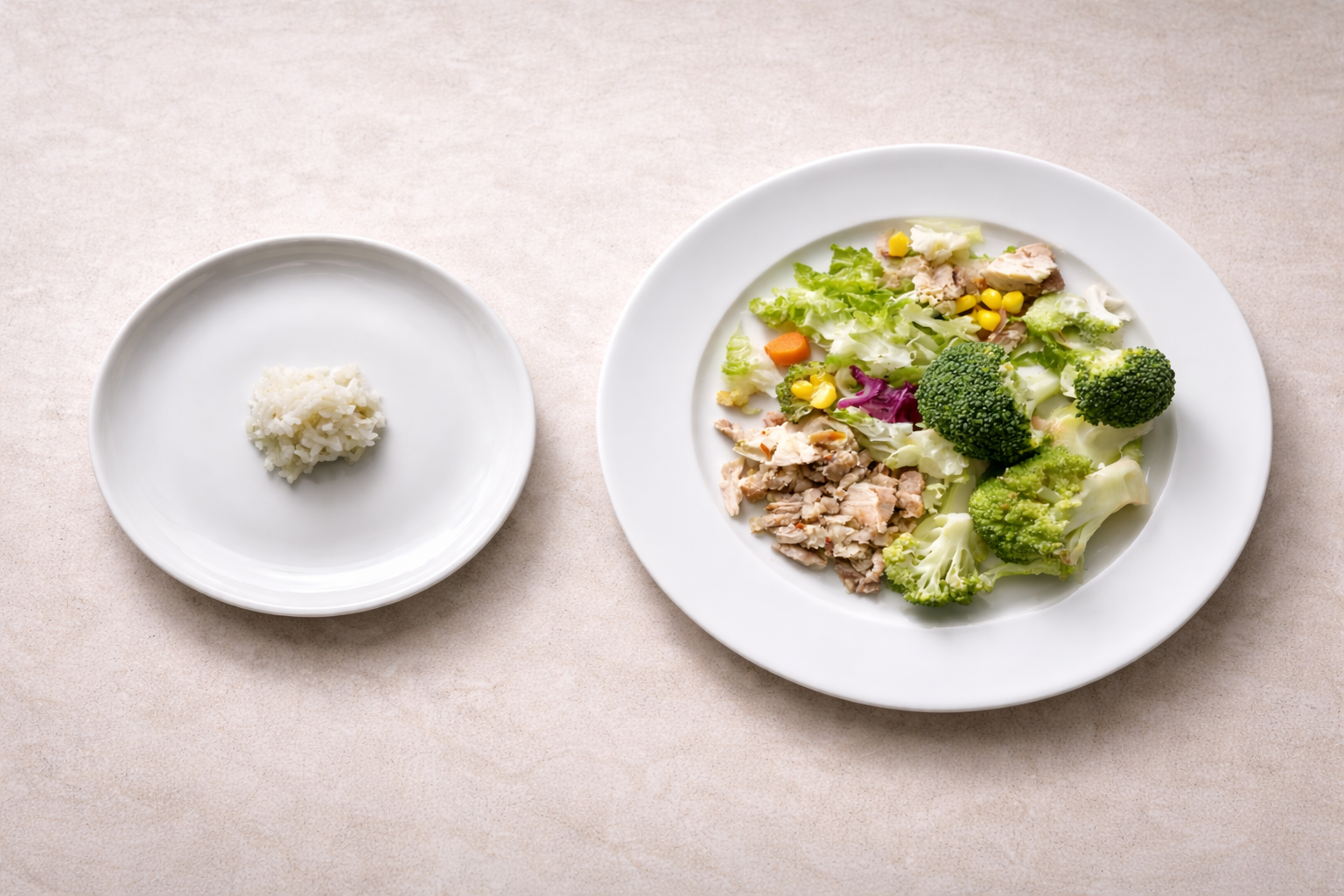
Let us explain the difference between weight loss mode vs maintenance mode.
Many people assume that maintaining weight loss simply means continuing what helped them lose weight.
Eat the same way.
Exercise the same way.
Stay just as strict.
But this assumption quietly causes more regain than almost anything else.
Because weight loss mode and maintenance mode are fundamentally different biological and psychological states.
If you’ve recently lost weight — especially with GLP-1 medications — understanding this distinction may be the single most important step in protecting your results long term.
What Is “Weight Loss Mode”?
Weight loss mode is a temporary physiological condition created when your body operates in a sustained energy deficit.
During this phase, several things are happening simultaneously:
- Calorie intake is reduced
- Stored energy is being used
- Hormones adapt to conserve energy
- Behavioural vigilance increases
Whether achieved through medication, diet changes, or both, weight loss mode is inherently intensive and time-limited.
It works because conditions are intentionally altered.
The Biological Reality of Weight Loss Mode
When body weight decreases, the body responds adaptively.
Research consistently shows:
- Resting metabolic rate decreases
- Hunger hormones increase
- Satiety signals weaken
- Energy efficiency improves
This process — often called metabolic adaptation — is not a malfunction. It is survival biology.
Your body interprets weight loss as a potential threat to energy stability and attempts to restore balance.
GLP-1 medications help counteract some of these signals temporarily by reducing appetite and improving satiety.
But the underlying biology never disappears entirely.
The Psychological State of Weight Loss Mode
Weight loss mode also creates a unique mental environment.
Many people experience:
- High motivation
- Clear short-term goals
- Frequent reinforcement from scale changes
- Strong external structure
Progress is visible and rewarding.
The scale moves regularly, which reinforces behaviour.
This feedback loop makes adherence easier — even when effort is high.
Why Weight Loss Mode Cannot Last Forever
A common but understandable mistake is trying to remain permanently in weight loss mode.
This usually looks like:
- Continuing aggressive restriction
- Avoiding normal eating flexibility
- Increasing exercise volume indefinitely
- Feeling anxious about relaxing rules
Unfortunately, long-term restriction often produces the opposite outcome.
Over time it can lead to:
- Increased hunger
- Mental fatigue
- Loss of lean muscle mass
- Episodes of overeating
- Gradual rebound weight gain
The body and brain both resist permanent deficit.
Weight loss mode is a phase, not a lifestyle.
What Is Maintenance Mode?
Maintenance mode begins when the goal shifts from reduction to stability.
The objective is no longer losing weight.
The objective becomes living sustainably at your new weight.
This requires a different skill set.
Maintenance mode focuses on:
- Energy balance rather than deficit
- Consistency rather than intensity
- Adaptability rather than strict control
It is less dramatic — but far more durable.
Further in depth reading: “what actually drives long-term weight maintenance”
The Biology of Maintenance Mode
After weight loss, your body settles into a new equilibrium.
Key priorities become:
- Preserving lean muscle mass
- Stabilising appetite signals
- Supporting metabolic health
- Preventing gradual upward trends
This is why strategies such as adequate protein intake and strength training become especially important during maintenance.
They help the body interpret your new weight as stable rather than temporary.
The Psychology of Maintenance Mode
Maintenance success depends heavily on mindset shifts.
Unlike weight loss mode:
- Progress is invisible
- Success looks like “nothing changing”
- Motivation must come from identity rather than urgency
This can feel surprisingly uncomfortable at first.
Many people report thinking:
“If I’m not losing, am I slipping?”
In reality, stability is the goal.
Maintenance replaces excitement with confidence.
Further research: “evidence showing different drivers of fat loss and maintenance”
The Most Common Transition Mistake
The biggest error people make after weight loss is continuing to behave as if they are still trying to lose.
This can create a cycle:
- Continued restriction
- Rising hunger
- Mental exhaustion
- Overcorrection eating
- Guilt and renewed restriction
The problem is not lack of discipline.
The problem is using the wrong strategy for the phase.
Maintenance requires loosening control slightly while increasing awareness.
How Maintenance Mode Actually Works
Successful maintenance usually includes several consistent principles.
Structured Eating Without Rigidity
Rather than strict dieting rules, maintenance thrives on predictable patterns:
- Regular meals
- Balanced macronutrients
- Flexible food choices
Structure reduces decision fatigue while allowing real life to continue normally.
Strength and Muscle Preservation
Muscle tissue plays a key role in long-term energy expenditure.
Resistance training helps:
- Maintain metabolic rate
- Improve insulin sensitivity
- Support appetite regulation
During maintenance, strength becomes more valuable than calorie burn.
See: Why Strength Training Matters More After Weight Loss
Early Course Correction
Weight stability does not mean perfect consistency.
Small fluctuations are normal.
The difference between long-term success and regain is early adjustment.
Responding calmly to trends — rather than reacting emotionally — prevents small changes from compounding.
(See also: Why appetite changes after GLP-1 medications)
Why Maintenance Often Feels Harder Than Weight Loss
This surprises many people.
weight loss mode vs maintenance mode
Weight loss has:
- Clear milestones
- Visible rewards
- External validation
Maintenance has:
- Subtle progress
- Internal rewards
- Long timelines
It requires trusting processes rather than chasing outcomes.
But this is also where true freedom develops.
You are no longer trying to change your body — you are learning to live comfortably within it.
The Identity Shift That Makes Maintenance Work
Long-term stability is less about rules and more about identity.
Instead of thinking:
“I am dieting.”
Maintenance thinking becomes:
“I am someone who maintains my health.”
This subtle shift changes decision-making automatically.
Habits become expressions of identity rather than acts of control.
(See also: Shifting identity after major weight loss)
The Bottom Line
Weight loss mode vs maintenance mode: They are not extensions of the same process.
They are different phases requiring different strategies.
Weight loss mode relies on intensity and deficit.
Maintenance mode relies on stability and sustainability.
If you feel uncertain after reaching your goal weight, that uncertainty is normal.
You are not losing momentum.
You are entering the phase where results become permanent.
Support for the Maintenance Phase
Many people discover that maintaining weight loss raises new questions — even after successful treatment.
How much structure is enough?
What changes are normal?
When should you adjust?
WeightMaintenance was created specifically for this stage.
Inside the community, members receive:
- Evidence-informed guidance
- Practical maintenance strategies
- Early course-correction tools
- Calm, judgement-free support
If you’d like structured help as you transition into maintenance mode:
Download our E-Guide to support your first 30-days of weight maintenance. Click HERE