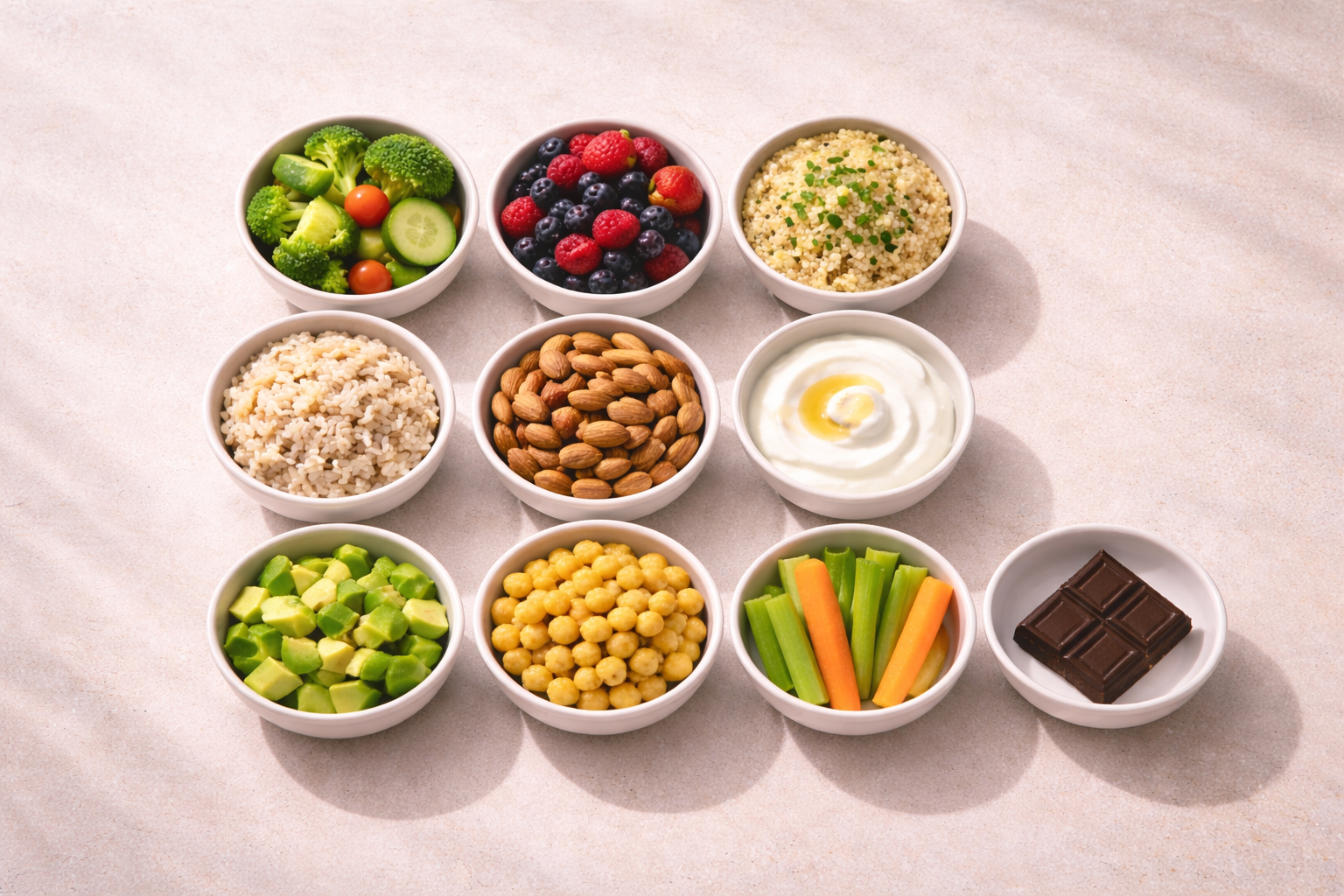
After weight loss, many people expect eating to feel simple again (without a flexible food structure):
The strict phase is over.
The goal weight has been reached.
Life should return to normal.
And yet, this stage often feels unexpectedly uncertain.
Questions arise quietly:
- How often should I eat now?
- How much structure do I still need?
- Am I being too relaxed — or too strict?
This uncertainty is common because maintenance requires a skill rarely discussed during weight loss:
Flexible food structure.
Not dieting.
Not complete freedom.
But a middle ground that supports stability without creating pressure.
Why Structure Still Matters After Weight Loss
During weight loss, structure is usually external:
- Medication schedules
- Meal plans
- Clear rules
- Defined goals
These frameworks reduce decision-making.
When weight loss ends — especially after GLP-1 medications — that external structure often disappears.
But biology has not fully reset.
Appetite signals may still be adapting (see: Why appetite changes after GLP-1 medications), and without some structure, eating patterns can gradually drift.
Structure provides stability during this transition.
The Problem With “All or Nothing” Eating
Many people move between two extremes after weight loss:
Extreme 1: Continued Diet Mode
- Strict rules remain in place
- Foods feel restricted
- Eating becomes stressful
Over time, this can increase mental fatigue and rebound eating.
Extreme 2: Complete Removal of Structure
- Meals become irregular
- Hunger cues are harder to interpret
- Food choices become reactive
This can lead to gradual regain without obvious behavioural change.
Flexible structure sits between these extremes.
What Is Flexible Food Structure?
Flexible food structure means creating predictable eating patterns while allowing normal variation.
It includes:
- Regular meal timing
- Balanced meals
- Planned flexibility
- Calm course correction
The goal is not control.
The goal is reducing decision fatigue so healthy choices happen more automatically.
Further research: what flexible eating actually means
Why the Brain Benefits From Predictability
Human decision-making relies heavily on routines.
After weight loss, constant food decisions can become mentally exhausting.
Predictable eating patterns help by:
- Reducing impulsive choices
- Stabilising energy levels
- Supporting appetite regulation
- Lowering food anxiety
Structure acts as a supportive environment rather than a restriction.
The Role of Hunger in Maintenance
One surprising adjustment after GLP-1 treatment is relearning normal hunger.
During medication use, hunger signals are often muted.
When they return, people may either distrust hunger or respond urgently to it.
Flexible structure helps recalibrate hunger awareness by providing regular opportunities to eat before hunger becomes overwhelming.
This prevents the cycle of under-eating followed by overeating.
Core Elements of Flexible Food Structure
Consistent Meal Anchors
Most successful maintenance patterns include three consistent eating anchors per day.
This does not mean rigid schedules — only general rhythm.
Regular meals help stabilise appetite hormones and energy levels.
Balanced Composition
Meals that combine:
- Protein
- Fibre
- Healthy fats
- Carbohydrates
tend to produce longer satiety and fewer cravings.
(See also: How protein supports weight maintenance)
Planned Flexibility
Flexibility works best when expected, not accidental.
Examples include:
- Social meals
- Restaurant dining
- Travel days
Planning flexibility reduces guilt and prevents overcorrection behaviours.
Reliable “Default Meals”
Many people benefit from a small set of repeatable meals that require minimal effort.
These serve as stabilisers during busy periods when decision-making capacity is low.
Maintenance thrives on reliability more than novelty.
Why Over-Restriction Backfires in Maintenance
After weight loss, the body remains sensitive to perceived scarcity.
Aggressive restriction may trigger:
- Increased hunger signals
- Heightened food focus
- Reduced energy levels
Ironically, loosening rules slightly often improves long-term stability.
Maintenance is not about eating less forever.
It is about eating predictably enough that the body feels safe.
Flexible Structure and Weight Stability
People who maintain weight successfully often share one pattern:
Their eating is consistent but not rigid.
They rarely swing between extremes.
Instead, they:
- Notice small changes early
- Adjust gently
- Return to familiar routines
This approach aligns with Normal weight fluctuations vs true regain, where trends matter more than individual days.
Building Your Personal Structure
There is no universal maintenance diet.
But helpful questions include:
- When do I naturally feel hungry?
- Which meals keep me satisfied longest?
- What routines work during busy weeks?
- Which foods feel sustainable long term?
Maintenance succeeds when structure fits your life — not when life must fit the structure.
“research comparing flexible vs rigid dieting” further evidence on flexible dieting for weight maintenance
The Emotional Benefit of Flexible Structure
One of the biggest changes people report during successful maintenance is reduced mental noise around food.
Eating becomes:
- Predictable
- Calm
- Less emotionally charged
Confidence grows not from strict control but from knowing you can adjust when needed.
This supports the identity transition described in Shifting identity after major weight loss.
What Flexible Maintenance Actually Looks Like Day to Day
In practice, flexible structure might look like:
- Eating breakfast most days but not obsessively
- Keeping protein-rich foods available
- Having familiar go-to meals
- Enjoying social eating without compensation behaviours
- Returning to routine naturally afterward
There is structure — but also permission.
The Bottom Line
Maintenance eating is not dieting.
It is also not complete spontaneity.
Flexible food structure creates a middle path where:
- Hunger feels manageable
- Decisions feel easier
- Weight remains stable
- Life remains enjoyable
You are not trying to control every meal.
You are building an environment where stability happens naturally.
Support for Building Sustainable Habits
Many people discover that maintaining weight loss is less about knowing what to eat and more about knowing how to structure everyday life around food.
How much flexibility is healthy?
When should you adjust routines?
What changes are normal during maintenance?
WeightMaintenance was created to support this exact phase.
Inside the community, members receive:
- Practical maintenance frameworks
- Habit-building guidance
- Early course-correction strategies
- Calm, judgement-free support
Download our E-Guide to support your first 30 days of weight maintenance. Click HERE