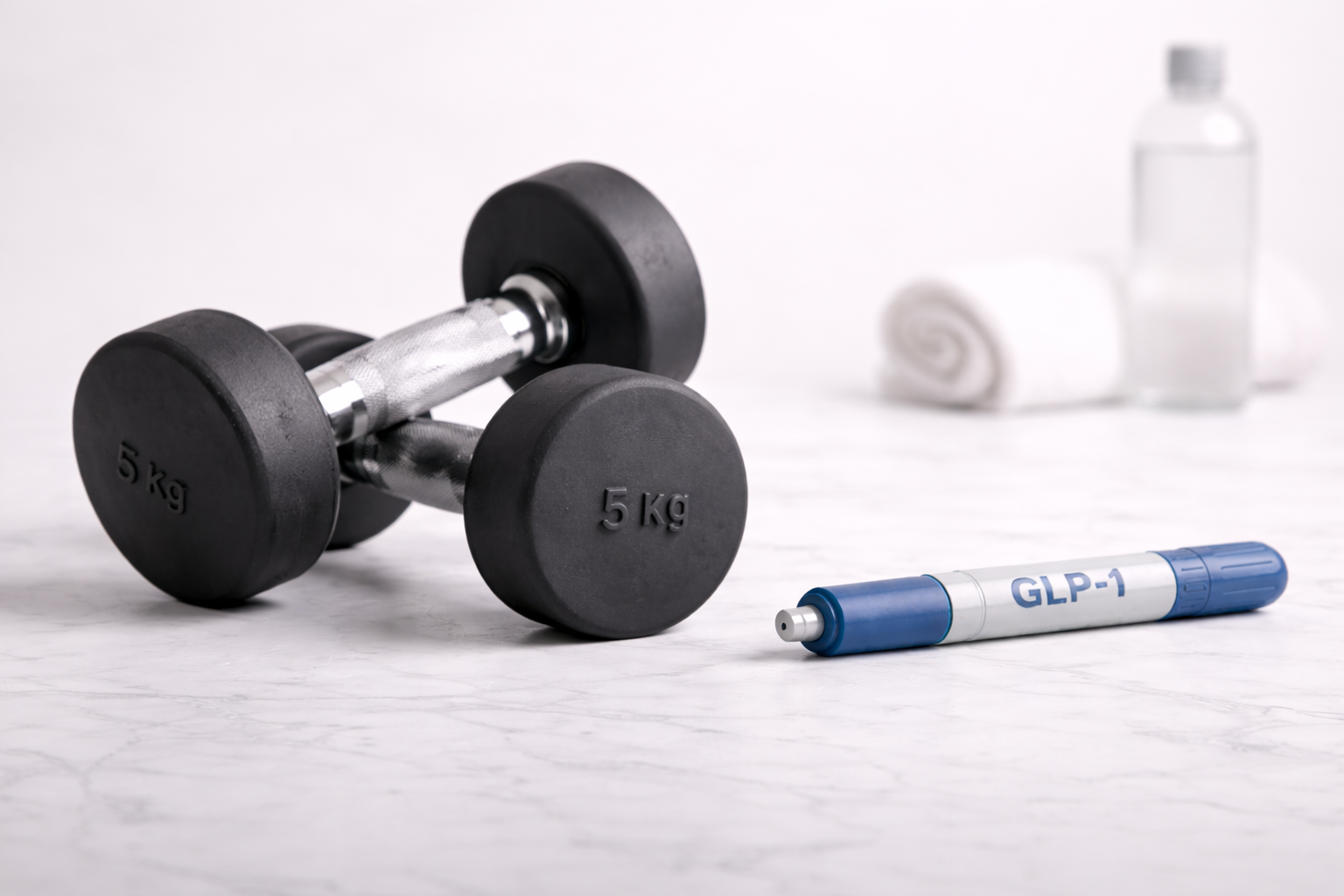
After losing weight, many people ask a simple question:
“What exercise should I do now to keep the weight off?”
The most common assumption is cardio.
More walking.
More running.
Equals more calories burned.
But surprisingly, long-term research and clinical experience increasingly suggest something different:
Strength training after weight loss becomes more important than calorie-burning exercise.
Not because it accelerates further weight loss — but because it helps your body accept and stabilise your new weight.
This distinction matters deeply during the maintenance phase, particularly after GLP-1 medications, when metabolism and appetite are recalibrating.
What Happens to the Body After Weight Loss
Weight loss changes more than body size.
It alters how your body uses energy.
Common physiological adaptations include:
- Reduced resting metabolic rate
- Increased hunger signalling
- Improved energy efficiency
- Loss of both fat and lean mass
These changes are explored in Weight loss mode vs maintenance mode, where the body transitions from deficit toward equilibrium.
The challenge is not simply maintaining habits — it is maintaining metabolism.
And muscle plays a central role in that process.
The Hidden Cost of Weight Loss — Muscle Loss
When weight decreases, the body loses a combination of:
- Fat mass
- Water
- Lean tissue (including muscle)
Without resistance training, a meaningful percentage of weight loss may come from muscle.
Why does this matter?
Because muscle tissue influences:
- Resting energy expenditure
- Glucose regulation
- Physical function
- Appetite stability
Less muscle can mean a lower metabolic baseline — making weight maintenance more challenging over time.
Strength training helps protect against this outcome.
Muscle as Metabolic Protection
Muscle is metabolically active tissue.
While its calorie-burning effect is often exaggerated in popular media, its real value lies in regulation rather than simple energy expenditure.
Healthy muscle mass supports:
- Stable blood sugar control
- Improved insulin sensitivity
- Better nutrient partitioning
- Greater resilience during dietary fluctuations
In practical terms, muscle helps your body handle normal eating patterns without large swings in weight.
This is especially important after GLP-1 treatment, when appetite signals may begin to change.
(See also: Why appetite changes after GLP-1 medications.)
Why Cardio Alone Is Not Enough
Cardiovascular exercise remains valuable for heart health, mood, and general wellbeing.
However, relying solely on cardio after weight loss can create unintended challenges.
High volumes of cardio may:
- Increase hunger in some individuals
- Contribute to fatigue
- Accelerate lean mass loss when paired with restriction
Cardio burns energy during activity.
Strength training changes how your body manages energy all day.
Maintenance benefits more from metabolic stability than temporary calorie expenditure.
Strength Training Supports Appetite Regulation
One of the lesser-known benefits of resistance training is its influence on appetite.
Regular strength training can:
- Improve satiety signalling
- Stabilise blood glucose
- Reduce energy crashes
- Support consistent hunger patterns
When combined with adequate protein intake (explored in How protein supports weight maintenance), resistance training helps create meals that feel satisfying rather than restrictive.
This reduces the likelihood of reactive overeating — a common concern after weight loss.
Strength Training Helps the Body Accept Its New Weight
After weight reduction, the body may still interpret the lower weight as temporary.
Strength training sends powerful physiological signals that the new body composition is functional and sustainable.
These signals include:
- Mechanical loading of muscle tissue
- Improved neuromuscular efficiency
- Increased functional capacity
In simple terms, strength training tells the body:
“This body is being used. Keep it.”
Over time, this helps stabilise weight rather than triggering compensatory adaptations.
What Counts as Strength Training?
Strength training does not require extreme workouts or gym expertise.
Effective resistance training can include:
- Bodyweight exercises (squats, push-ups, lunges)
- Resistance bands
- Free weights
- Machines
- Pilates-style resistance work
The goal is progressive muscle engagement — not exhaustion.
Consistency matters more than intensity.
How Much Strength Training Is Enough?
Research and public health guidance generally suggest:
- 2–3 sessions per week
- Full-body movements
- Moderate effort levels
Sessions do not need to be long.
Even 20–30 minutes of structured resistance work can produce meaningful benefits when performed regularly.
Maintenance success comes from sustainability, not perfection.
Common Fears About Strength Training After Weight Loss
“I don’t want to bulk up.”
Muscle growth occurs slowly and requires specific conditions. Maintenance-focused strength training after weight loss primarily preserves function and tone.
“I’ve never exercised before.”
Many successful maintenance routines begin with simple movements performed at home.
Progress can be gradual.
“Cardio burns more calories.”
True during the workout — but maintenance depends more on long-term regulation than short-term expenditure.
Strength Training and Confidence
Beyond physiology, strength training often changes how people relate to their bodies.
After weight loss, focus frequently remains on appearance or scale numbers.
Strength introduces a different metric:
Capability.
People begin noticing:
- Increased strength
- Improved posture
- Greater energy
- Physical confidence
This shift supports the identity transition explored in Shifting identity after major weight loss.
Maintenance becomes less about controlling weight and more about supporting health.
Combining Strength Training With Daily Movement
The most effective maintenance approach combines:
- Regular daily movement (walking, activity)
- Structured resistance training
- Adequate recovery
This balance supports cardiovascular health while preserving muscle and metabolic stability.
Extreme exercise is rarely required.
Consistency wins.
What a Sustainable Routine Looks Like
A realistic maintenance routine might include:
- Two strength sessions weekly
- Daily walking or light activity
- Gradual progression over months
- Flexible scheduling
The goal is to create a rhythm that continues during busy or stressful periods.
Maintenance habits must survive real life.
The Bigger Picture — Strength as Long-Term Insurance
Strength training is not punishment for eating.
It is not compensation for calories.
It is a form of biological insurance.
By preserving muscle and supporting metabolism, resistance training helps reduce the gap between appetite and energy expenditure — the gap where regain often develops.
When combined with stable nutrition and awareness, it becomes one of the most reliable tools for long-term weight stability.
The Bottom Line
After weight loss, exercise priorities change.
The goal is no longer maximising calorie burn.
The goal becomes supporting a body that can comfortably maintain its new weight.
Strength training helps by:
- Preserving muscle mass
- Supporting metabolic health
- Stabilising appetite signals
- Improving confidence and function
You are not exercising to lose more.
You are exercising to stay well.
Support During the Maintenance Phase
Many people discover that exercise feels different after weight loss.
How much is enough?
What matters most?
How do you stay consistent without becoming overwhelmed?
WeightMaintenance exists to guide this stage.
Inside the community, members receive:
- Practical maintenance frameworks
- Evidence-informed guidance
- Sustainable habit strategies
- Calm, judgement-free support
Download our E-Guide to support your first 30-days of weight maintenance. Click HERE