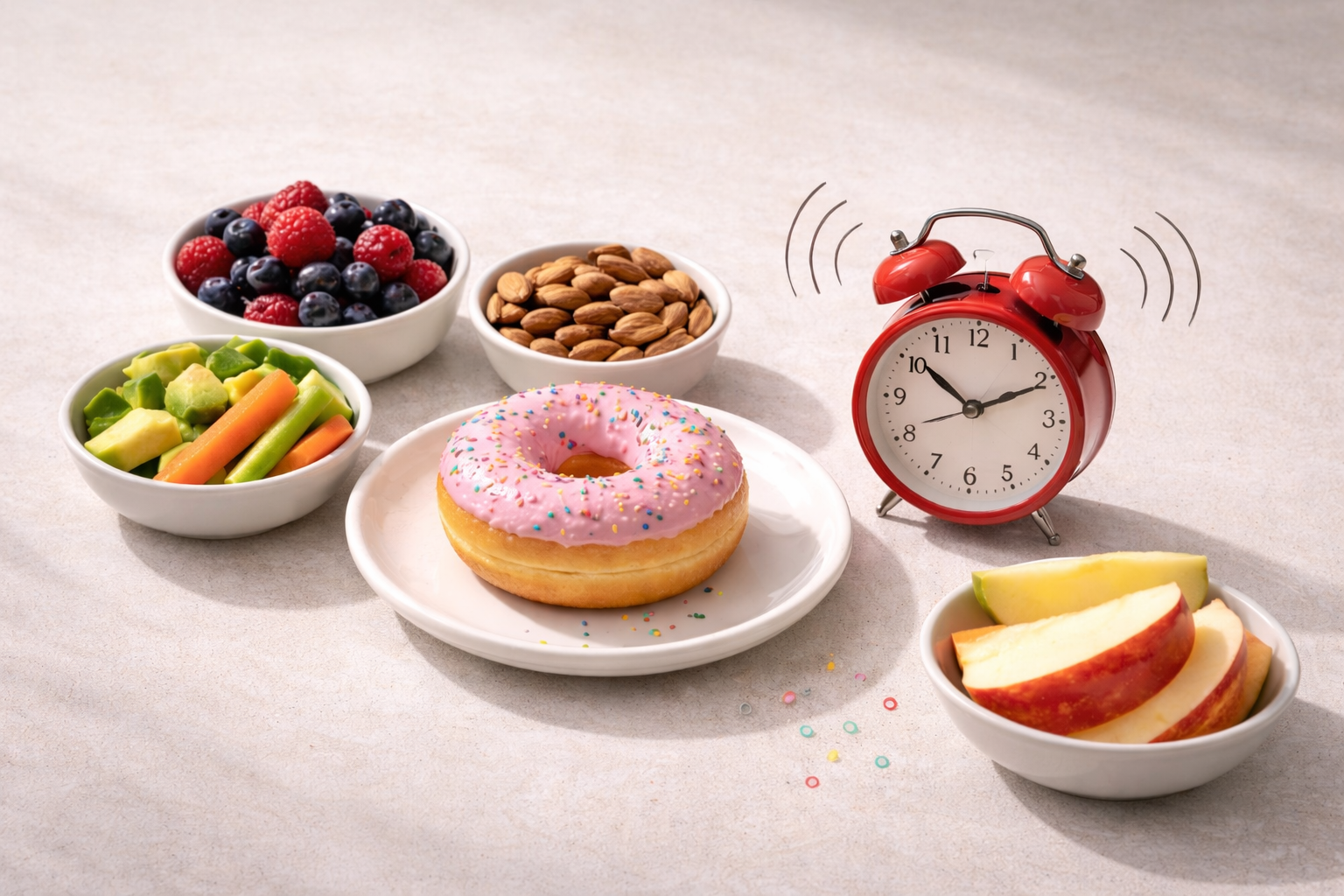
Many patients notice reduced food cravings, or “food noise,” while on weight loss medication. Coversely, there is often heightened food noise when stopping GLP-1s. Don’t worry: there are strategies to manage this.
Why food noise returns:
- GLP-1s reduce appetite and cravings.
- When stopped, your body naturally signals hunger more strongly.
Coping strategies:
- Structured meal planning to avoid impulsive eating.
- Mindful eating practices: slow down, savor meals, and notice fullness.
- Regular exercise, which helps regulate appetite.
- Use behavioral strategies like journaling or therapy.
- Consider a maintenance dose or alternative therapies if cravings are strong.
Returning food noise is normal. With structured lifestyle strategies, you can maintain your weight and control cravings.
What “Food Noise” Really Means
“Food noise” is the constant mental chatter about food.
It can include:
• Thinking about your next meal shortly after eating
• Strong cravings for specific foods
• Difficulty feeling satisfied
• Urges to eat without physical hunger
While on medications like Mounjaro, this noise often becomes noticeably quieter.
When it returns, it can feel sudden — and discouraging.
But it is not a sign of failure.
It is your biology re-engaging.
Why Food Noise Returns After Stopping Mounjaro
GLP-1 medications work by influencing appetite regulation pathways.
They:
• Slow gastric emptying
• Increase feelings of fullness
• Reduce reward-driven eating
When the medication is removed, these effects reverse.
Your body is not “breaking.”
It is returning to its natural baseline signals.
This often includes:
• Stronger hunger cues
• Increased interest in food
• Reduced satiety after meals
Understanding this removes unnecessary self-blame.
The Psychological Impact of Food Noise Returning
Many people are unprepared for the mental shift.
Common reactions include:
• “Why am I thinking about food all the time again?”
• “I thought I had this under control.”
• “Am I going to regain the weight?”
This can create anxiety during maintenance — especially if your internal sense of identity hasn’t fully caught up with your progress (see: Shifting Identity After Major Weight Loss).
But the key shift is this:
You are now managing appetite without pharmaceutical support.
That requires strategy — not perfection.
Structure Becomes More Important Than Willpower
Without GLP-1 support, relying on willpower alone is rarely effective.
Structure reduces decision fatigue and impulsive eating — a key part of building a stable maintenance mindset (see: Building Flexible Food Structure in Weight Maintenance).
Helpful approaches include:
• Eating at consistent times each day
• Planning meals in advance
• Keeping regular food routines
Instead of asking,
“What do I feel like eating?”
You shift to,
“What supports my maintenance?”
This reduces the intensity of food noise over time.
Using Meal Composition to Reduce Cravings
What you eat influences how much food noise you experience.
Meals that stabilise appetite typically include:
• Adequate protein
• Fibre-rich carbohydrates
• Healthy fats
These combinations:
• Improve satiety
• Reduce blood sugar fluctuations
• Help you stay fuller for longer
In contrast, highly processed, low-protein meals tend to amplify cravings.
Food noise is not just about quantity — it is about composition.
Mindful Eating as a Practical Tool
Mindful eating is often misunderstood.
It is not about eating slowly for the sake of it.
It is about reconnecting with internal signals.
Key practices include:
• Eating without distraction
• Noticing taste and texture
• Pausing during meals
• Recognising fullness cues
This helps rebuild trust in your body’s signals — especially after relying on medication.
The Role of Exercise in Appetite Regulation
Exercise is often viewed only as a calorie-burning tool.
But it also plays a role in appetite regulation.
Regular movement can:
• Improve hunger hormone balance
• Reduce stress-related eating
• Support metabolic stability
Particularly helpful forms include:
• Strength training
• Walking
• Moderate-intensity cardio
Exercise creates a more stable internal environment, which can reduce food noise intensity.
(See: Why Strength Training Matters More After Weight Loss).
Behavioural Strategies for Managing Food Thoughts
Food noise is partly biological — but also behavioural.
Helpful strategies include:
• Journaling cravings to identify patterns
• Creating pause rules before eating (e.g. 10-minute delay)
• Identifying emotional vs physical hunger
• Building non-food coping mechanisms
In some cases, structured support such as therapy or coaching can be valuable.
These strategies help shift your response to food thoughts — reinforcing the identity of someone who maintains, rather than reacts (see Shifting Identity After Major Weight Loss).
Considering Ongoing Support or Maintenance Dosing
For some individuals, food noise becomes significantly disruptive.
Options to consider include:
• A reduced maintenance dose of GLP-1 (see: Is a Maintenance Dose of GLP-1 Right for You?).
• Alternative medications
• Structured clinical support
This is not a step backwards.
It is a tool — like any other — to support long-term health.
The goal is sustainability, not unnecessary struggle.
Normalising the Experience
One of the most important things to understand:
Returning food noise is normal.
It does not mean:
• You have lost control
• Your progress is undone
• You are “back at the beginning”
It simply means:
You are now operating without the appetite-suppressing effects of medication.
And that requires a different skill set.
Building Confidence Without Medication
Confidence in maintenance grows through experience.
You begin to notice:
• You can handle cravings without reacting immediately
• You can stay consistent even when hunger increases
• You can return to structure after deviations
These moments build trust.
Confidence grows through repeated evidence — the same process that underpins identity change after weight loss.
Over time, food noise becomes less overwhelming — not because it disappears, but because your response improves.
See: How Do I Maintain My Weight Without Medication Support?)
The Bottom Line
GLP-1 medications reduce food noise.
When they stop, that noise can return.
This is expected — not a failure.
Long-term success comes from:
• Building structure
• Supporting appetite with nutrition
• Developing behavioural strategies
• Strengthening self-trust
You are not trying to silence food thoughts completely.
You are learning to manage them effectively.
And that is what creates sustainable weight maintenance.
Support Through the Transition Off GLP-1
Stopping medication is not just a physical change — it is a behavioural and psychological transition.
Inside WeightMaintenance, members receive:
• Practical strategies for managing returning hunger
• Structured maintenance systems
• Tools to reduce food noise impact
• Ongoing support during adjustment phases
If you want steady guidance as you transition off GLP-1 support:
Download our E-Guide to support your first 30-days of weight maintenance. Click HERE