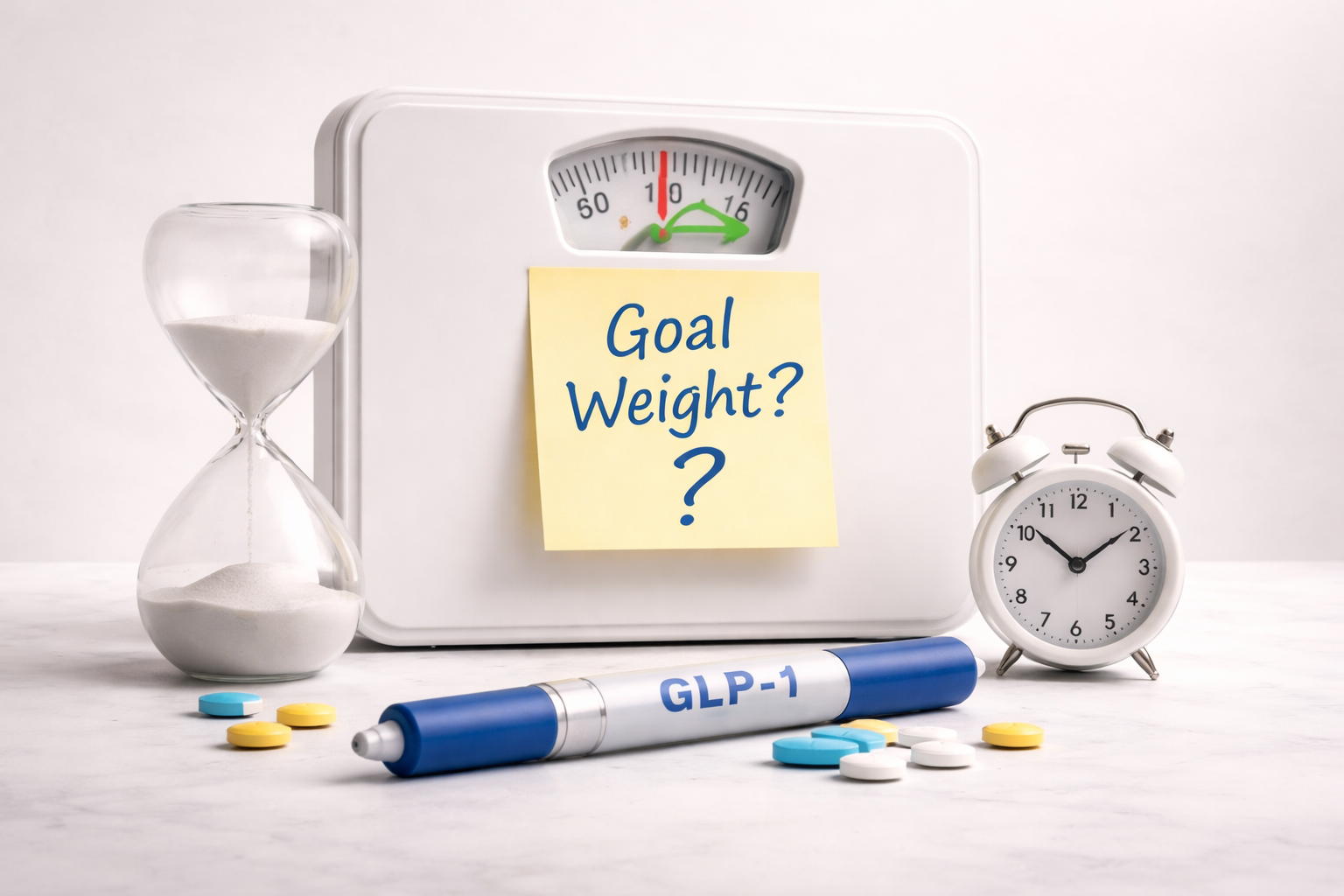
Expected Weight Loss, and When to Stop
GLP-1 weight loss expectations – these medications are effective tools for weight loss.
But it is important to understand:
• What results are realistic
• How long to use them safely
• When to adjust or stop
Clear expectations help you approach weight loss — and maintenance — in a more structured and sustainable way.
How Long Can You Safely Use GLP-1 Medications?
GLP-1 medications such as Mounjaro and Ozempic are generally well tolerated.
They are often used for extended periods — but always under medical supervision.
Most clinical studies follow patients for:
• 6 to 12 months for weight loss outcomes
• Up to 1–2 years for longer-term data
Some individuals continue beyond this with guidance.
The key point is:
These medications are not designed as short-term fixes.
They are tools that can be used as part of a longer-term strategy.
See: How Do I Maintain My Weight Without Medication Support?
What Weight Loss Can You Expect?
Weight loss with GLP-1 medications varies between individuals.
However, typical outcomes include:
• Around 10–15% of body weight
• Most progress occurring within the first 6–12 months
Some people may lose more, particularly with consistent lifestyle support.
Others may experience slower progress.
Both can be normal.
Why Weight Loss Often Slows Down
Early weight loss can feel rapid.
Over time, it usually slows.
This happens because:
• The body adapts to reduced calorie intake
• Metabolism becomes more efficient
• The rate of fat loss naturally decreases
This is not a sign that the medication has stopped working.
It is a normal phase of the process.
Shifting focus from speed to sustainability becomes important here.
The Goal: Sustainable, Not Rapid, Results
Faster is not always better.
Sustainable weight loss is more likely when:
• Habits develop alongside medication use
• Muscle mass is preserved
• Extreme restriction is avoided
The aim is not just to lose weight.
It is to maintain it long term.
When Should You Consider Stopping?
There is no single “correct” time to stop GLP-1 medication.
However, common points include:
• Reaching your target weight
• Stabilising your weight for a period of time
• Developing consistent lifestyle habits
At this stage, some individuals:
• Reduce to a maintenance dose
• Begin tapering off
• Transition to lifestyle-only maintenance
(See: I’ve Reached My Target Weight – Now What? Understanding Maintenance Dose.)
Why Tapering Is Often Recommended
Stopping medication abruptly can make appetite changes feel more intense.
Tapering allows your body to adjust gradually.
Benefits include:
• Smoother return of hunger signals
• Easier behavioural adjustment
• Reduced risk of rapid regain
This creates a more controlled transition into maintenance.
When You May Need to Stop Earlier
In some cases, stopping sooner may be appropriate.
This can include:
• Persistent or uncomfortable side effects
• Difficulty tolerating the medication
• Personal or medical reasons
Any decision should be made with appropriate guidance.
What Happens After You Stop?
After stopping GLP-1 medication, you may notice:
• Increased hunger
• Return of food noise
• Greater effort required to maintain structure
(See: Why Am I Hungrier After Stopping GLP-1 Medication?)
This is expected.
It reflects the removal of appetite suppression — not a loss of progress.
Planning for the Transition to Maintenance
The most successful outcomes occur when maintenance is planned — not reactive.
This includes:
• Building consistent eating patterns
• Understanding appetite signals
• Developing behavioural strategies
• Maintaining regular activity
(See: How Do I Maintain My Weight Without Medication Support?)
The goal is to replace medication support with sustainable systems.
Avoiding the “All-or-Nothing” Trap
A common mistake is viewing medication use as either:
• Fully on
• Completely off
In reality, there is a spectrum.
Options include:
• Maintenance dosing
• Gradual reduction
• Periodic reassessment
Flexibility allows you to adapt based on your needs.
The Bottom Line
GLP-1 medications can support significant weight loss.
Typical expectations include:
• 10–15% body weight reduction
• Most progress within 6–12 months
Stopping is not a single moment.
It is a transition.
Long-term success comes from:
• Realistic GLP-1 weight loss expectations
• Gradual adjustments
• Strong lifestyle foundations
You are not just losing weight.
You are building the system that allows you to maintain it.
Support Through Weight Loss and Beyond
Understanding when to stop — and how to maintain — can feel unclear.
Inside WeightMaintenance, members receive:
• Guidance through each phase of GLP-1 use
• Support transitioning to maintenance
• Practical tools for appetite and habit management
• Ongoing structure and accountability
If you want support navigating weight loss and what comes next:
Download our E-Guide to support your first 30-days of weight maintenance. Click HERE